Thursday, September 18, 2008

Avatar. The Experience of Virtual Worlds

from How They Got Game:

I am happy to announce that Avatar. An Experience into the Virtual World will open on October 10 2008 at the Museo Tridentino di Art Naturali in Trento, Italy. Curated by Carlo Maiolini, Avatar is a major event dedicated to the art and culture of virtual worlds. If you're lucky enough to travel to Northern Italy this Fall you will find a piece of both How Got Game and the Stanford Humanities Lab in the exhibition. In fact, I had the opportunity to contribute to the production of Avatar together with many Italian researchers, journalists, and curators. The 'core team' features, among the others, Domenico Quaranta (new media critic and co-curator of GameScenes. Art in the Age of Videogames), Paolo Pedercini (the enfant terrible behind La Molleindustria) and Ivan Fulco (journalist and editor of Virtual Geographic. Travels into the Worlds of Videogames). The committe was directed by Mario Gerosa (essayist, chief redactor of AD Architectural Digest). As Carlo Maiolini explains:

"AVATAR will be a virtual exhibition. The only physical set up will be a room equipped with several computer kiosks. The visitors will enter the exhibition from these hi tech kiosks, using an avatar. As it happens in all virtual worlds, the users will be able to interact freely and, using voice chat, could decide to visit the exhibition together""

What, when and where: Avatar. An Experience into the Virtual World, Museo Tidentino di Scienze Naturali, Trento, Italy, October 10 2008 - January 10 2009.

For more information, click here.

Read more:
Avatar. The Experience of Virtual Worlds

'Reset Generation' Producer Interview

from G4 TV - X-Play:

Executive producer Scott Foe gives the skinny on the quirky free adventure title, Reset Generation.

Spoofing off several popular gaming icons such as Mario and Sonic, this title mixes in action elements and puzzle mechanics to deliver one funny-as-heck gaming experience. And best of all, it's free.


Go ahead and check out the game here. Reset Generation is published by Nokia.

Read more:
'Reset Generation' Producer Interview

id: Rage Too Complicated For User Mods

from Kotaku:


id say that user mods of their new driving/shooting things game Rage might not be possible due to the complex way the game engine handles textures.

The id Tech 5 engine uses 'MegaTextures' - huge texture maps (up to 128000x128000 pixels) that require huge amounts of preprocessing to create.

id - and John Carmack in particular - are still very much pro-modding and have confirmed their plans to eventually open-source id Tech 5, but are unsure if there is a way around this technical limitation. Simply put, it is unlikely that any modder would have the computing resources that are required.

Just a thought - this sounds like an area where a project like Folding @ Home could be useful. Sure, cancer might not get cured as quick but, c'mon - MegaTextures!

Id Software's Willits: Rage Mods May Not Be Possible [Gamasutra]

Read more:
id: Rage Too Complicated For User Mods [Rage]

The Best Damn Video Game Informercial You'll Ever Not Walk Away From

from Kotaku:

Many years ago I had the pleasure of interviewing Todd Tuckey, owner of TNT Amusement, for a story I was working on about arcade machine ownership and restoration. The man is a font of information and a genuine arcade aficionado. He also makes a living restoring, storing and selling arcade and pinball machines.

Every time we talked over the years he would mention his infomercial. An hour long commercial for his place that was so packed with info, silly jokes and eyes on retro machines, that it had earned itself a cult following. Finally, one day I asked him how I could watch it and he said that it wasn't online. So I told him to send us a copy so we could host it.

The entire hour may not be for everyone, but if you like arcade gaming, you should probably watch a bit of it. Personally, I think it's awesome.

TNT Amusement

Read more:
The Best Damn Video Game Informercial You'll Ever Not Walk Away From [Video]

Atari Going After iPhone Breakout Clones

from Kotaku:

Atari has fired off some stern letters to iPhone games developers, citing infringement of their Breakout intellectual property.

Bootant has received a takedown for Break Classic and BreakTouch 3D and SpiffyWare was given a talking to for SuperPong 2 - citing both Breakout and Pong infringements.

Thing is, while the Tetris clone Tris was pulled, this was due to the too-similar name - the gameplay was almost certainly not actionable. If Atari are applying the same legal principles, shouldn't they also be going after the producers of Breakin' 2: Electric Boogaloo?

Read more:
Atari Going After iPhone Breakout Clones [BreakOut]

Video: Fallout 3's Propaganda Advertising

from Wired: Game|Life:

Despite my apprehension over Fallout 3, I can't get enough of Bethesda's faux retro, neo-propaganda advertisements for the game.

The company has just launched "Prepare for the Future," an interactive collection of such films designed to simultaneously promote their game and ensure all of you still living in a fictionalized 1950s America survive the impending nuclear apocalypse with your Leave It To Beaver morality and conveniences intact.

The above clip is only one of nine available from the site, each of which should rank among the best advertising efforts from the gaming industry this year.

Read more:
Video: Fallout 3's Propaganda Advertising

Games of Tokyo Game Show's Indie Showcase

from Wired: Game|Life:


The finalists for the "Sense of Wonder Night 2008" indie game showcase -- to be held as part of next month's Tokyo Game Show -- have been announced.

The event has been promoted as a celebration of creative and experimental gaming, and all 12 of the finalists will be on hand October 10 to present their game.

Below, the complete list of those who made it, with the title of the game followed by its creator.

  • Camera - Yareyare (Japan)

  • Genocide Automation - Naoya Sasaki (Japan)

  • The Misadventures of P.B. Winterbottom - The Odd Gentlemen (U.S.)

  • Nano Smiles - Yu Iwai (Japan)

  • Randy Balma: Municipal Abortionist - Mark Essen (U.S.)

  • WhiteSpace - Ian Dallas (U.S.)

  • Depict - Jesus Cuauhtemoc Moreno Ramos (Mexico)

  • Trash Box - Trash Box Team (Japan)

  • Moon Stories - Daniel Benmergui (Argentina)

  • PixelJunk Eden - Q Games (Japan)

  • Futago To - Omega (Japan)

  • World Icelansista - Ambition (Japan)

Image: CESA

Read more:
Sense of Wonder Night 2008 Finalists [CESA, via Indie Games]

Q&A: Linden Lab CEO Mark Kingdon on Second Life's latest evolution

from VentureBeat - DigitalMedia:

Virtual worlds are in fashion now, drawing investments of $184 million in 23 worlds in the first quarter. But the original player here is Linden Lab, which launched Second Life in 2002. Mark Kingdon came aboard as chief executive of Linden Lab in May, replacing longtime CEO and founder Philip Rosedale, who remains chairman. More than 15.1 million registered users have tried out the virtual world. Kingdon was formerly the CEO of online creative/marketing agency Organic. Today, Linden Lab announced Direct SLurl, a way to get into Second Life from the web. We chatted with Kingdon about the state of Second Life and the virtual world industry.

Read more:
Q&A: Linden Lab CEO Mark Kingdon on Second Life's latest evolution

Making of Left 4 Dead Video Presentation

from GamesRadar - News:

Doug Lombardi has sent L4D411 an exclusive 10-minute HD video presentation by Gabe Newell on the making of Left 4 Dead along with an extended E3 trailer. This presentation was originally made at E3 2008 for members of the press and E3 awards judges, and contains portions not previously available to us common folk.

Gabe goes into detail on many aspects of the making of Left 4 Dead, including their goals in development, the what and why of the AI Director, all about the monsters including animation, physics and AI, and also all about the world including graphics and lighting technology.

Read more:
Making of Left 4 Dead Video Presentation (Left 4 Dead)

AGDC: Area/Code's Lantz On Creating Parking Wars For Facebook

from GameSetWatch:

-[Almost the final AGDC lecture write-up, woo, and in this case, I was really stoked to see Frank Lantz speaking about Parking Wars, since it's possibly the best originally-designed Facebook game so far, and I keenly follow him and his developer.]

In a Worlds In Motion Summit panel at AGDC, Area/Code co-founder Frank Lantz has been discussing the creation of Parking Wars, the Facebook game sensation created as a promotion for the A&E TV show, and pinpointing the "core values of good games" along the way.

Area/Code, the New York-based developer which recently made Gamasutra 20 list of Breakthrough Developers, saw Parking Wars turn wildly popular, with 400,000 people signing up in two months.

Read more:
AGDC: Area/Code's Lantz On Creating Parking Wars For Facebook

CBS News Interview Will Wright About Spore

from GamePolitics News:

CBS News correspondent Daniel Sieberg interviews Will Wright about Spore. It's a DRM-free conversation and the second installment of this week's three-parter, The Games Our Children Play.

Catch part one, detailing the landmark Teens, Video Games & Civics report issued by the Pew Internet & American Life Project here.

Read more:
CBS News Interview Will Wright About Spore

Manager In A Strange Land: MS Project, How I Hate It

from GameDevBlog:

I used to love the idea of MS Project.

While working on Spider-Man 2, we'd often hear the same story:

"I was going to work on this, but I couldn't because such-and-such wasn't ready, so I tried to work on this other thing instead, but such-and-such wasn't ready, so I ended up working on item C."

I kept hearing those stories and thinking - we really should be using MS Project. It tracks dependencies! It will help prevent these sorts of problems! It's the piece of the puzzle we're missing! Once we start tracking dependencies, we'll be unstoppable!

Read more:
Manager In A Strange Land: MS Project, How I Hate It

Guest Columnist: Spacewar! - A Journey Into Gaming History

from The Escapist : Latest News:

Today's videogames owe much - perhaps everything - to the dedicated and inventive members of the MIT Tech Model Railroad Club.

Read more:
Guest Columnist: Spacewar! - A Journey Into Gaming History

RPS Demands: I Want To Live Forever

from Rock, Paper, Shotgun:

I have a challenge, developers. I know you’re reading. I want a high profile, big budget, mainstream action game in which the player character is invincible. I believe that the next truly great game will be the one that does this.

Games have come close. There have obviously been infinite lives for many. Mario, as he ages, becomes far more generous with his back-up existences – anyone who played Galaxy will know it was hard to have few than a few dozen laying around. Then of course there’s Quicksave, which creates an artificial invincibility, so long as you remember to hammer it frequently enough. And perhaps the closest to the goal would be time travel, with games like Prince of Persia and Braid demonstrating that you can have a great deal more fun if you’re not constantly condemned to death.

Read more:
RPS Demands: I Want To Live Forever

Teaching Halo to Think

from Edge Online:

If the Halo series’ single player can be defined by any one element, it’s its AI. The sophistication with which enemies and allies fought in the first game revolutionised the FPS on its release, eight years ago. Lead AI programmer Damián Isla has worked at Bungie since Halo 2 development began, and was at the Develop conference to talk about how his work has changed through each title. We took a moment between sessions to talk about smoke and mirrors, natural language, and the dream of the ‘You’re doing it wrong’ button.

Read more:
Teaching Halo to Think

Steam DRM Vs Spore DRM

from Kotaku:

Spore's digital rights management and copy protection has gotten a lot of people up in arms. The reaction has been so strong, with nega-reviews flooding Amazon and DRM creatures flooding the Sporepedia, that Electronic Arts said they're planning on implementing a patch to loosen up their current installation guidelines.

But Electronic Arts isn't the only company to ever use a built-in online copy protection system. A small company called Valve, publishers of such indie titles as Portal, Half-Life 2 and Team Fortress 2, knows all about the ups and downs of DRM and copy protection.

Back in 2004 Valve was at the heart of a hurricane of controversy surrounding the use of online authentication after their relatively new digital distribution system, Steam, ran into a hiccup and was unable to keep up with the online validations for mega-hit Half-Life 2. But things have run relatively smooth since then, with the exception of a major outtage in 2006. I talked to Valve's Doug Lombardi yesterday to ask how they've managed to smooth out the wrinkles of DRM with Steam and how their copy protection compares to Spore's.

Read more:
Steam DRM Vs Spore DRM [Digital Rights Management]

Training Wheels: My First MMO

from Kotaku:


I am not an MMO player.

I might go so far as to say my preferred play style is inherently incompatible with the mere idea of MMOs, never mind personality quirks that make spending time online with strangers sound more like torture than fun. I'm a solitary gamer, so when I fire up a console or turn on a handheld, I’m looking for a solitary escape. I want to get sucked in, be it flinging chickens in Harvest Moon or sinking into an RPG for hours on end. Generally, I don’t want to share my gaming experience — sure, I do multiplayer games at parties, I’ve sat around with friends and watched them play or had them watch me as we discuss games. But in general? Please, please, please leave me alone.

But when an email from a Perfect World PR person popped up in my Kotaku inbox, asking if I’d like to take the new ‘international’ version of Wanmei shijie for a spin, I — against my better judgment — said ‘Oh, what the hell,’ booted my poor little Mac up into Windows, and downloaded my first MMO client. Because as solitary a gamer as I am, I do write a lot about MMOs, have friends who play MMOs and delight in telling me their latest exploits, am interested in the mechanics and social elements of MMOs. I’m generally fascinated by the dynamics of online communities, so wouldn’t it be nice to be an observer from the inside for once? I marveled at the character creation options, selected the human melee ‘blademaster’ class (with a minimum of eye rolling), and ran with it.

Read more:
Training Wheels: My First MMO [Feature]

Lord British Visits The Colbert Report

from Kotaku:

There certainly is a large amount of gaming news relating to Comedy Central's cartoon character Stephen Colbert floating about these days, isn't there? While we eagerly await the announcement of the world's first video game based on a fake news personality, Stephen himself will be hobbing knobs with none other than game industry legend and Keeper of the Sacred Rattails Lord "Richard Garriott" British. British will be appearing on The Colbert Report this evening to discuss Operation Immortality, his DNA in space project that will eventually result in an evil Crecente clone army taking over the known universe. Luckily for us the question of "How do you really get to know a universe?" is still very much up in the air. Way up.

Be sure to set your favorite TV recording device to see if Colbert can possibly resist saying something about Garriott's magnificent hair.

Read more:
Lord British Visits The Colbert Report [Tivo Alert]

And Finally: Will Wright Ponders User-Generated Gameplay, Says Post-'Spore' Project Is 'Grandiose'

from MTV Multiplayer:

Will WrightThis is how we wrap-up our regularly scheduled “Spore” launch coverage: with a final excerpt from my conversation with the game’s lead creator Will Wright.

This time we cover the future of the game, what Wright is doing next … and what he thinks of my idea for “Spore 2” — a game comprised of user-generated gameplay. He didn’t laugh off my idea. In fact, he offered a tantalizing take on it.

Here’s our conversation:

Read more:
And Finally: Will Wright Ponders User-Generated Gameplay, Says Post-'Spore' Project Is 'Grandiose'

Tim Sweeney Interview

from Real-Time Rendering:

Tim Sweeney is a cofounder of Epic Games and lead developer behind the graphics engines for the Unreal series of games. Jon Stokes has a meaty interview with him, up on Ars Technica; go read it!

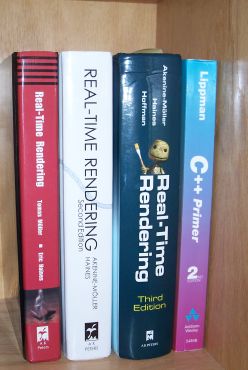
fourth edition might be C++?Tim talks about how the GPU has become general enough that we will soon be able to get away from rasterization as the only rendering algorithm. Back ten years ago, dealing with an API to do all interactive graphics was limiting. Widening it out with programmable shaders gives more flexibility, but at the cost of complexity of managing the programming environment. Nowadays you’re programming two separate computers that talk to each other. The shift to parallel programming is already a major change in how we need to think about computers, one that hasn’t become a core concept for most of us, yet (myself included; I’m doing my best to wrap my head around Intel’s Threading Building Blocks, for example). Doing such programming in a few different languages is a “feature” we’d all love to see go away.

With Larrabee, CUDA, and compute shaders, the trends of more flexibility continue, though in different flavors. It seems unlikely to me that the pipeline model itself for rendering will fade in popularity any time soon, though rasterization (traditional GPUs) vs. tiling (Larrabee, handhelds) will continue to be a debate. Tim mentions voxel rendering techniques (really, heightfield, in the old games) as something that died once the GPU took over. True. Such techniques are making a return on the GPU even today, via relief mapping and adaptive tessellation. We’re also seeing volume rendering by marching along rays; if an algorithm can be refit to work on a GPU, it will find some use.

So I agree, the increase in flexibility will be all to the good in letting programmers again do much more than render textured opaque triangles via a Z-buffer really fast and most everything else not-so-fast. Frankly, I believe much of the buzz about interactive ray tracing is more an expression of yearning by us graphics programmers that we could actually program again, vs. calling an API. The April Fool’s Day spoof about ray tracing in DirectX 11 fooled a number of people I know, I believe because they wished it were true. Having hacked my fair share of rendering algorithms, I certainly see the appeal.

I think Tim’s a bit overoptimistic on the time frame in which such changes will occur. First, everyone needs to get this future hardware. Sure, NVIDIA points out there are 70 million CUDA-capable graphics cards out there today, but no one is floating CUDA-based programs as alternative interactive renderers at this point (though NVIDIA’s experiments with CUDA ray tracing are wonderful to see). DirectX 9 graphics cards will be around for years to come. As significant, making such techniques part of the normal development toolchain also takes awhile. I think of how long normal (dot-product) bump mapping, introduced around 2001, took to become a feature that was used in games: first most GPUs had to support it, then tools had to generate and manage the maps, then artists had to be trained to use the tools, etc.

When the second edition of our book came out, it was a few hundred pages longer than the first. I held out the hope to Tomas that our third edition would be shorter. My logic was that, with programmable shaders coming to the fore, we wouldn’t have to cover all the little variants that were possible, but rather could just present pure algorithms and not worry about the implementation details.

This came true to some extent. For example, we could cut out chunks of text about extremely specific ways to efficiently compute the Fresnel term, or give examples showing how assembly instructions are packed together in a pixel shader. There was now plenty of space on the GPU for shader instructions, so such detail was nonsensical. It would be like a programming languages book listing all the programs that could be written in the language. We still do have to spend time dealing with the vagaries of the APIs, such as the relatively space-inefficient ways in which triangles are fed through the pipeline (e.g. a “compact” representation of a cube must use 24 separate vertices, when all that is really needed are 8 points and 6 normals).

Counterbalancing such cuts in text, we found we had many more algorithms to write about. With both the increase in abilities in each successive generation of GPUs and APIs, coupled with research into ways to efficiently map algorithms onto new architectures, the book became considerably longer (and certainly heavier, since each illustration’s atoms now each needed 3 bytes instead of 1). So, I’m not holding out much hope for a shorter edition next time around-there’s just so much cool stuff that we can now do, and more yet to come.

Incidentally, we had asked Tim for a pithy quote for our new Hardware chapter. He said he didn’t have anything, but passed on one from Bily Zelsnack. This quote was tempting, but instead we used it in our last chapter: “Pretty soon, computers will be fast,” which I just love for some reason. It may sometimes take 20 seconds to open a file folder on Windows today, but I remain hopeful that someday, someday…

Read more:
Tim Sweeney Interview

Miyamoto: ESA Champion 2009

from G4 TV - X-Play:

The "Walt Disney" and "father" of modern and electronic gaming, Mr. Shigeru Miyamoto, will be receving the 2009 ESA champion award during the "Nite to Unite For Kids" event, sponsored by the ESA, this October 22 in San Francisco, CA. “With his remarkable creativity and passion for fun, family entertainment, Miyamoto-san and his team at Nintendo have produced many iconic games that appeal to audiences of all ages," said by Michael D. Gallagher, president and CEO of the ESA.

Miyamoto will join award recipients such as George Lucas and Sony's Ken Kutaragi. Hit the source for more info about the event. You go raise that roof now, Miyamoto-san!

Source

Read more:
Miyamoto: ESA Champion 2009

ASSIMP - the Asset Import library - first public release

from GameDev.Net:

The Asset Import library, ASSIMP in short, has reached beta development state. Assimp is a C++ library which loads game-relevant 3D scene data from various file formats and returns it in a common in-memory structure. At the moment, the library supports .3ds, .lwo. .obj, .smd, .x and several more. A separate viewer (Win/DirectX only) was built on top of the library and can be used to quickly inspect the contents of a file.

Read more:
ASSIMP - the Asset Import library - first public release

New Version of ShaderMap

from GameDev.Net:

Version 1.1 of ShaderMap, the 3d map conversion tool, has been released. It now supports conversion of height and normal maps to ambient occlusion maps. Other improvements include modification of existing tangent space normal maps, a streamlined user interface, and online documentation. ShaderMap Command Line (CL) is free for non-commercial use.

Read more:
New Version of ShaderMap

PyroGine SDK Beta 2.0 Released

from GameDev.Net:

Jarrod Davis Software is please announce the latest beta release of PyroGine SDK, an advanced 2D game application framework for PC's running Microsoft Windows and Direct3D with 3D hardware. It is made with and usable from the Delphi programming language from CodeGear.

Read more:
PyroGine SDK Beta 2.0 Released

Leadwerks Engine Evaluation Kit Released

from GameDev.Net:

The Leadwerks Engine public evaluation kit has been released. Leadwerks Engine is a next-gen 3D engine with support for deferred shadowmap lighting, built-in physics, and a simple procedural command set. The engine SDK includes Leadwerks Sandbox, a real-time editor that allows instant lighting visualization and interactive physics.You can download the evaluation kit and learn more here, or watch a features overview. More than three hours of video tutorials are available on our site.

Read more:
Leadwerks Engine Evaluation Kit Released

News: Sega's "offensive and distressing" Condemned ads banned by ASA

from GamesIndustry.biz - News:

Violent TV adverts ruled as inappropriate for broadcasting following complaints of "condoning violence"

Read more:
News: Sega's "offensive and distressing" Condemned ads banned by ASA

Austin GDC: The Best Of Wednesday's Coverage

from GameSetWatch:

[Wow, we're basically done - I'm about to hop on a plane back to California - but here's the remainder of the AGDC pieces we haven't features. Hope you liked our show coverage!]

Gamasutra was at Austin GDC 2008 this week, and we've compiled the best of our industry-leading coverage of the major MMO and virtual world, game writing, and audio lectures presented since Wednesday. You can also read our coverage from Monday's presentations and Tuesday's sessions.

AGDC, which is organized by Gamasutra parent Think Services, is took place in the Austin Convention Center from Monday 15th-Wednesday 17th September, and multiple Gamasutra reporters were on hand to document many of the lectures and panels taking place there.

Here are the highlights of Wednesday's sessions at AGDC 2008:

Read more:
Austin GDC: The Best Of Wednesday's Coverage

EULA, RMT Debated at Austin GDC

from GamePolitics News:

So, who actually owns your MMO avatar's high-end gear?

Not you, according to the fine print for most online games.

End user license agreements (EULA) and real money trading (RMT) were among the topics debated by a panel at this week's Austin Game Developers Conference (AGDC), reports Worlds in Motion. Panel members included game designer Raph Koster, Scott Hartsman of Ohai, attorney S. Gregory Boyd, author (and "EA spouse") Erin Hoffman as well as moderator Erik Bethke of GoPets. Boyd and Koster made some key points in relation to player ownership of avatar gear:

Boyd: Couple of reasons [why the player doesn't get to own in-game items]. The first is liability. If I want to cancel someone’s account, I don’t want to have to pay the person the value of that sword. Second I don’t want to compensate them or own up to anything when I nerf that sword for balancing reasons...

Koster: All of these things are ultimately just bits and bytes in the database... I’m just fine with saying ‘yeah, that’s SOE’s sword. Damn straight!’ Where it starts getting a little weirder is that those databases are all a log of a player’s experience. In any place but gaming, something like your quest log should be protected by privacy laws... If you really want to know what’s the cutting edge of this, I’d look at China. Because their government has stepped in and said ‘I don’t care what your EULA is, here are the new rules.’

Read more:
EULA, RMT Debated at Austin GDC

Edge Online Editor: Spore DRM Does Not Encourage Piracy

from GamePolitics News:

With the controversy surrounding Spore's DRM reaching a fever pitch, Edge Online Editor Colin Campbell argues for calm and disputes some of the current theories about the relationship between DRM and piracy:

The anti-DRM crowd. They have a point, but then it gets lost by mob-insanity... They get mad about EA only offering three installs for Spore. I don't know many people who install games on three computers, but I dare say it's a few. EA says 1%. OK. That's a significant number of people, all in all. They ought to be offered some more options...

I agree that the DRM solutions currently in use are often frustrating and damage publishers. They need to be improved. Customers need to be heard. Action needs to be taken. EA needs to address these issues one by one.

But there's also a nasty sort of relativism going on here, that is weakening the position of those protestors who have a genuine grievance... And this mob-pandering argument that DRM encourages piracy? Please. What encourages piracy is dishonesty. Either you're the sort of cheap f**k who wants something for nothing, or you're not.

GP: For my money, Edge Online is among the top tier of video game news sites, but I can't get behind Colin on this one. In regard to the issue regarding the number of installs, here's a snippet of something I wrote this week for the Philadelphia Inquirer about my own gaming experience:

If you change PC’s or you are the type who keeps games for a long time and re-installs them periodically, you could be in for trouble. For example, I’m still playing EA’s Battlefield 1942 five years after release. I’ve lost count of the number of times I’ve deleted and reinstalled the game.

Read more:
Edge Online Editor: Spore DRM Does Not Encourage Piracy

Postmortem: Little Boy Games' Go! Go! Break Steady

from Gamasutra:

In this exclusive Gamasutra postmortem, the developers of XBLA title Go! Go! Break Steady pointedly detail the trials and tribulations of making an original IP console title as a two-man indie dev.

Read more:
Postmortem: Little Boy Games' Go! Go! Break Steady

AGDC: Krawczyk, Cooper On Getting Game Dialog Right In God Of War 3

from GameSetWatch:

-[Alongside all of the online game stuff at Austin GDC, let's not forget that there are audio and writing summits, too, and this neat melange of the two has a voice actor and a writer discussing how dialog comes out correctly (and not horribly!) for AAA games.]

In a talk at the Austin Game Developers Conference, God Of War 3 writer Marianne Krawczyk and voice actor DB Cooper discussed some notable changes needed to stop terrible game dialog or voice acting that might "haunt game writers for the rest of their lives."

Cooper explained to the audience, which was divided between audio professionals, writers, and voice actors, that "we want to keep your game off of AudioAtrocities.com," noting that it's the lack of useful direction on the character's intent or in terms of how you want the gamer to feel that can hobble things for everyone.

The voice actor, who has previously worked with publishers such as Electronic Arts and Midway, had surveyed her game-related voice actor compatriots on what they were given in terms of material to work with on voice acting. According to her, game voice actors will often get an Excel document with a referenced intonation style ("serious" or "upbeat") and individual lines to say.

Often, this just isn't enough to do the lines justice from an acting point of view, with no rehearsal, and "very little information about their characters unless they're very lucky," according to Cooper.

Chipping in, game writer Krawczyk, who is currently working on God Of War 3 for PlayStation 3, added: "I write in screenplay format [for the God Of War series]", suggesting that the Excel/intonation method seems "very limited, and out of context to any relationships."

In fact, Krawczyk revealed that for the currently in-production God Of War III, "we're going to do some rehearsals and some table reads," in order to have everyone understand their characters.

This is the first time that a TV show or theater-styled table read (with actors present and rehearsing ensemble ahead of the voice recording) has been done for Sony Santa Monica's series -- and is still extremely rare throughout the entire game business.

Going on, the writer, who has also worked on titles including Midway's Area 51, the upcoming God Of War III is "a very specific three-act experience," adding that the script is probably 120 pages in length.

Later in the discussion, Cooper gave an example of "jamming" on voiceovers to work out the context of a talk between Kratos and Athena in God Of War II -- pointing out that with a game like God Of War, "We expect Gods to have lofty language... you just want it to sound good."

But it's easy to "play it safe" by just booming those lines in an authoritative fashion, and the duo explained how working out the precise motivation of the characters beyond simply authority made the lines so much better when correctly sourced, explored, and acted.

Read more:
AGDC: Krawczyk, Cooper On Getting Game Dialog Right In God Of War 3

At Austin GDC, Precious Pieces of Gaming History

from Wired: Game|Life:

Brownbox

AUSTIN -- The Austin Game Developers Conference this week played host to a small museum of priceless gaming artifacts.

The University of Texas Videogame Archive had a booth in the exhibitors hall at the Austin GDC. Chief among the archive's collectibles is a perfect replica of Ralph Baer's "Brown Box", a prototype of the world's first game console, which was originally built in 1968.

The device plays a game that's similar to Pong. Controllers feature three twisty knobs: one controlling the vertical movement of your avatar (a square), one controlling its horizontal movement, and one putting English on the movement of the ball you're batting back and forth (a smaller square).

Joel Reed Parker of GameSetWatch was kicking my ass in a two-player match. Luckily, the Brown Box is so primitive that it doesn't keep score.

More amazing artifacts below.

Img00028

Warren Spector donated some of his papers to the archive, including this original design document for the game that became Deus Ex.

Img00029

Here's an early sketch of a Deus Ex GEP gun.

Img00030

Finally, here are some issues of vintage game development zines, with contributions by the likes of Dani Bunten (then still going by "Dan") and Chris Crawford.

Thanks to Zach Vowell of the UT game archive for showing me this great stuff.

Photos: Chris Baker/Wired.com

Read more:
At Austin GDC, Precious Pieces of Gaming History

Does Digg Decrease Game Prices?

from The Escapist : Latest News:

The infamous "Digg Effect" that has brought down many websites featured on the site's home page might be having the same affect on used game prices.

Read more:
Does Digg Decrease Game Prices?

Next YoYo Games Competition Officially Announced

from YoYo Games Glog:

The fourth YoYo Games competition has now officially been announced. As indicated before, the theme is Save the Planet. More information van be found at:

http://www.yoyogames.com/gamemaker/competition04

Note that you have till January 4 to create your games. That should give you ample time to produce your masterpieces.

Happy creating.

Read more:
Next Competition Officially Announced

The Making of Gesundheit!

from TIGSource:

Gesundheit! Design SketchMatt Hammill, funky, fearless creator of IGF Student Showcase nominated Gesundheit!, has been a busy, busy man. After IGF (which was fun, man—sucks I got sick!), he finished school, joined an animation studio, and even released a children’s book. Which is all thoroughly rad (congrats, Matt!), for sure, but, let’s be honest, what we here at TIGS want is more of that super cute, hand-drawn, homemade gaming goodness. Thankfully, he’s been “pluggin’ away” at that too!

Just recently he did a little making-of feature on Gesundheit! for Game Developer Magazine’s fall Game Career Guide, which you can find right here. It’s got design sketches, fun mock-up artwork, and useful reflections on the game development process, specifically working with AGS. Groovy.

Update: He’s also got a collection of misc. game art he’s done up on his personal site. Bonus grooviness.

Read more:
The Making of Gesundheit!

Interview with Jeff Lait

from Temple of the Roguelike:

Mr. Lait

Jeff Lait is one of the longest standing figures in the roguelike development universe, for years he has been contributing useful ideas and information to r.g.r.d and developing his own game, POWDER, which has recently become pretty popular.

Check out the interview with the creator of the ever-popular POWDER handheld roguelike!

Read more:
Interview with Jeff Lait

How Nvidia Wants To Bring 3D Glasses Back

from Slashdot:

notthatwillsmith writes
"For the last ten years, we've heard the promise of 3D shutter glasses, which when combined with the proper video card drivers and a good display, can trick your brain into thinking that your 2D monitor is creating 3D images. Unfortunately the glasses never really took off, partly because there were rendering problems with many popular 3D games but mostly because monitors didn't support high enough refresh rates to display games without giving people crushing headaches. Nvidia thinks they've solved both problems--the software works much better, and there are a surprising number of supported 120Hz-capable TVs and monitors that ameliorate the headache factor. Maximum PC has a hands-on with Nvidia's new tech, plus details about Nvidia's planned hardware solution."


Read more:
How Nvidia Wants To Bring 3D Glasses Back

Chance, skill and the law

from GamesRadar - News:

Massively: "Ladies and gentlemen, we'd like you to give a big hand to the US Unlawful Internet Gambling Enforcement Act of 2006, which is back with us once again as a special, and rather unexpected guest. You see, while the UIGEA initially kicked around in 2006, the actual regulations that will implement it are just about to kick off.

Today, the House Financial Services Committee will be holding an emergency mark-up of some of this legislation. Why is it an emergency? Well, because while the whole thing is technically about 'gambling', the wording of the UIGEA isn't at all clear about what it actually is making unlawful, and when it comes to legislation and regulations, the words are everything. Words that are getting decided today."

Read more:
Chance, skill and the law (Second Life)

Bionic Commando producer: 'Bioshock was easy as hell'

from GamesRadar - News:

In an interview with VideoGamer.com, Ben Judd said that gamers now only want to die "once or twice" in games.

When we asked the Capcom producer if he reckons games are too easy on gamers these days, Judd replied: "Yes, I do. I think that if you look at one of the highest praised games of last year, BioShock, BioShock was easy as Hell, I don't care what anybody says. That's what people want. They want to play through it. They want to die once or twice. It's like an interactive movie, sort of. Gamers have lost their will to continually drill down on something."

Read more:
Bionic Commando producer: 'Bioshock was easy as hell'

Bionic Commando devs called 'arseholes' by rivals

from GamesRadar - News:

Bionic Commando Rearmed has set the "gold standard" for downloadable games, the game's producer has claimed.

Capcom's Ben Judd, producer on the Bionic Commando series, told VideoGamer.com that the Xbox LIVE, PSN and PC remix of the classic NES game has led to developers calling Capcom "arseholes" because of the high quality and cheap price of the game.

He said: "We've actually got phone calls from other developers saying 'you arseholes, now because you've made a game at such high quality and priced it at $10, now that's the gold standard. If we try and put out a game for $15 people are going to say, well what about Bionic Commando Rearmed? What if we put out a game that's just meta emulated, they're going say we're being greedy'. Because we've raised the bar to that level now we've got other developers on their toes, where they should be. There's a lot of potential there, but right now people are being too damn lazy. They're not paying the respect to the old classic games that they should."

Read more:
Bionic Commando devs called 'arseholes' by rivals

News: 97% of US teens play videogames

from GamesIndustry.biz - News:

New survey reveals most teen boys and girls play games socially.

Read more:
News: 97% of US teens play videogames

David Braben on all things PC. Including the P Word

from Rock, Paper, Shotgun:

I do like those Staring Eyes

Towards the end of July, at the Develop conference, we took a much-needed break from listening to design paradigm analysis to have a coffee with Frontier Developments‘ David Braben. He’s one of the living legends of the industry - one word:Elite - and it was a welcome chance to casually pick over the issues of the day. So, yes, the P-word features strongly.

Read more:
David Braben on all things PC. Including the P Word

Playing Together

from Only A Game:

What’s the difference between a gamer who prefers to play multiplayer games, and a gamer who prefers to play alone? In this final look at the DGD2 survey (for now, at least – I have some major posts to come, but they will have to wait) I will very briefly examine differences between players who prefer to play alone, and those that prefer to play with other people. (Values in brackets are the statistical significance of a 2-tailed t-test – the lower the value, the more significant the finding).

Read more:
Playing Together

LittleBigPlanet: This Gamer Fails At Creating A Horse

from GameXtract:

Sackboy, and LittleBigPlanet are making a big impact. Partially because the company has been able to bring both casual gamers, and hardcore together, but one question alot of users are wondering is just how easy is the creation system. Apparently its not as easy as it looks as this video we have for you today shows a gamer failing at constructing a moving horse. Whats even worse? It dosen’t have a head! I guess this bud going to need to need some serious LittleBigPlanet lessons. I just creating me vision of a flying hippo won’t take rocket science and intense calculations. Video after the jump!

Read more:
LittleBigPlanet: This Gamer Fails At Creating A Horse

'Runescape' Developer Interview

from G4 TV - X-Play:

Jagex Head of Corporate Communications Adam Tuckwell talks about the incredibly accessible and affordable browser-based MMORPG Runescape for the PC.

Runescape Developer Interview

Read more:'Runescape' Developer Interview

EA To Relax 'Spore' DRM In Upcoming Patch

from G4 TV - X-Play:

Seems like Electronic Arts has slightly succumbed to the internet outrage over Spore's DRM and will relax the copy-protection on Will Wright's new game in an upcoming patch.

The patch will add functionality to de-authorize computers, much like iTunes works for purchased tracks. You will still only be able to activate the game on three machines at a time, but you will be able to manually remove computers from the list.

This means that users should avoid being locked out if they significantly upgrade their computers several times or purchase new machines.

We think this is an excellent compromise. There are still no plans to change their policy of one online-enabled account per CD-key, however. While this might not affect most users, it is an issue for households with multiple gamers.

Source

Read more:
EA To Relax 'Spore' DRM In Upcoming Patch

Advice: How To Avoid Getting Caught In Managerial Rhetoric

from GameSetWatch:

- [Veteran, possibly pseudonymous game developer Matthew Wasteland writes the 'Arrested Development' humor column for Game Developer magazine, and we're now reprinting his best insights on Gamasutra. This installment helpfully translates common instances of producer-speak into painfully direct English.]

The path of career development in the game industry is fraught with strange hazards, not the least of which are the odd delusions that may be foisted upon you by your Management such that you may be a more productive and harmoniously integrated Work Unit.

Now, far be it from me, an established professional both famous and important, to stir up a hornet's nest of raving discontent -- I simply mean to help you keep a careful eye on your situation. It can spiral out of control very quickly and, like the lovely and tragic GLaDOS, you may find yourself in a kind of frenzied denial about how things really are.

In that light, here are some patterns you should learn to recognize so that you may have some signposts to guide you into the bracing realizations that may eventually lead you along the path of truth -- one which may lead you to greener pastures or to a fortune sought elsewhere. Or at least to an embittered and spiteful temperament that will scare the producers off so you'll be left alone.

"We just have to hunker down and ship this game, and then you'll all be rich -- like me!"

A potential bonus is not something that should be used to justify complete insanity on your part. We all know that money is a great motivator -- all the better when the people in charge don't actually have to pay any of it. Hinting at some breathtaking royalty payout that's just around the corner after the game is a huge hit (which it is practically guaranteed to be, surely!) usually does wonders for the crew, so it happens rather too frequently.

Here's a funny experiment you can try: ask someone in charge to describe how the royalty is actually calculated. You're likely to get a lot of puzzling airy statements, hand waving, and suddenly important phone calls. In the very best case, you may get a fancy chart or graph that tantalizingly teases at some kind of meaning, but never quite reaches it.

If you're truly curious, the real process is this: all that money goes into a big black box, and the tiniest little drop comes out of the other end for you, the diligent worker. That's given that you have a game that sells well at all, which sometimes you don't, exactly.

"Come on, you aren't being a team player -- support your buddies."

Everyone else buys into this whole "crunch for no reason and bad project management" thing, so why don't you? Maybe you're the crazy one!

Blatant attempts to coerce team dynamics like this are another management machination of which you should be very careful. Don't let them try to leverage to their own ends the soldier's camaraderie that develops when people are thrown into crappy situations together. Your grandchildren aren't going to ask you to tell them about the war video game you worked on once. They probably won't even know what video games are, let alone care.

"Well, you could always be flipping burgers."

When people complain about low pay or poor conditions, you sometimes hear the "you could always be flipping burgers" defense (or, "you could always be programming databases" for engineers, since they want to be speaking your language, of course). This is a strategy meant to distract the grumbler from realizing his job sucks by trying to get him to think of something even worse, never mind that a job flipping burgers might actually have reasonable hours.

Passive-aggressive overtones aside, this kind of justification is logically suspect since it confers upon the game industry some kind of special, extraordinary status. It's different than all other industries of the world! Getting utterly, totally screwed is somehow the price one must pay for the glamour and mystique of making video games for a living (or working in porn?). And if you can't deal with it, go get a "real" job.

It would be sublimely ironic if these ended up being the same people who wonder why the game industry doesn't get the respect and cachet it deserves from the other creative media, but that's probably too perfect to really be true.

"At least we have a really fun work environment."

The team is stuck at work late and on the weekend trying to get a disaster of a project into a box and out the door. Is it bad? Yes, it's terrible -- but wait! You get to eat barbecue! And there are fun distractions around the office. Why, it doesn't even feel like work at all, so what does it matter if you're there for all of your waking hours?

Standing around having a blast playing Guitar Hero with all your office mates in the wee hours of the morning is sure to have absolutely no effect on the pile of work that must be done to ship the game -- the pile of work being the reason you started crunching in the first place! -- so all you're doing is munching on the hair of the dog that bit you. I mean that metaphorically in most cases; the others -- you know who you are.

"Okay, we learned our lesson. We'll never run a project like this again. Promise."

After it's all over and the game has shipped, you'll hear this one. The reason is that suckers believe it every time.

[Mr. Wasteland also writes for his own blog, Magical Wasteland.]

Read more:
Advice: How To Avoid Getting Caught In Managerial Rhetoric

A Look At the Tools Used To Make Metal Gear Solid 4

from Slashdot:

Soft Image is running a detailed story about the making of Metal Gear Solid 4. They explain the game's development cycle, from the art direction to the animation of characters to the building of models and textures.

"In terms of bones used for constructing the bodies of characters, about 21 joint bones were used that contained animation data and were activated through these data. But many auxiliary bones were also used to supplement movements such as the twisting of knees, elbows, legs and arms. These were not activated by animation data. Rather, they were linked to the values of the basic joints that were activated by animation. ... They also used a tool to automatically generate the rig for controlling eyeball movement and the muscles around the eyes. Because the area around the eyes is also controlled using both shapes and bones, when the eyeball locator is moved, the muscles move smoothly just like they do for the mouth. Further, even if the shape is edited to redefine the eye edges, it does not spoil the blinking or brow furrow expressions at all."

Read more:
A Look At the Tools Used To Make Metal Gear Solid 4

Military Uses Virtual Iraq To Treat PTSD

from Slashdot:

Hugh Pickens writes

"Traditionally the best treatment for post-traumatic stress disorder [PTSD] — being raped, narrowly escaping the collapse of the Twin Towers, or witnessing a buddy die on the battlefield — is to have the person relive the trauma using his or her imagination. Repeated exposure to the horror can desensitize individuals and help them stay calm enough to reprocess what happened and get beyond it. Now Clinical Psychologist Albert "Skip" Rizzo has developed a program that has had great success in treating returning troops from Iraq. A soldier with PTSD recounts what happened, and a therapist seated before a computer then creates an environment in the program Virtual Iraq that captures the essential elements of the episode. By donning special goggles, the soldier can see a reenactment and while the simulation starts off relatively tame over the course of several weeks, the therapist monitors the patient 's response and more elements of the episode are introduced until the individual can finally go through an intensely vivid recreation of it without being overpowered by terror. Other programs offered to treat PTSD include Virtual Airplane, Virtual Audiences, Virtual Heights, Virtual Storm, and Virtual Vietnam."

Read more:
Military Uses Virtual Iraq To Treat PTSD

Prof Gets $100,000 Grant to Study World of Warcraft

from GamePolitics News:

Forget the infamous $600 toilet seat. When it comes to tax dollar expenditures that might raise an eyebrow, how does $100,000 to research how Americans play World of Warcraft sound?

As reported by the Orange County Register, Prof. Bonnie Nardi (left) of the University of California Irvine, received the $100K grant from the National Science Foundation for the project. At issue: why American players go to greater lengths to mod the popular MMO than do Chinese WoW players.

You can't make this stuff up.

Said Nardi, not surprisingly a WoW player herself:

We are examining the many reasons for this disparity, including cultural and institutional factors. The vast majority of Chinese players are not ‘gold farmers’... They’re ordinary players like anyone. The media has blown that story out of all proportion. Many people think Chinese play for a job. They play for fun...

[The] Chinese have invented some interesting ways to play with the in-game economy... Ways that I have not observed here in two years of studying ‘World of Warcraft.’ Chinese players are more attuned to the aesthetics of the game... They talked more about color schemes, animations, architecture, and so on more than American players...

Here and in Europe and Australia/New Zealand people play with parents and event grandparents. Not in China. The older generation dislikes video games. People here play with brothers and sisters. But in China people don’t have brothers and sisters for the most part, so friend relationships are very important.

GP: Okay, so I'm trying to imagine the budget request for this grant:

  • WoW - $19.99
  • Burning Crusade Expansion - $29.99
  • Pre-order Lich King Expansion - $39.99
  • Hot Alienware PC - $3,000.00
  • Strategy guide - $24.99
  • 12 month WoW subscription - $180.00
  • Power leveling service - $250.00
  • Ample supply of black market WoW gold - $1,000.00
  • TOTAL: $4,544.96

So... the rest is going for pizza and energy drinks?

I'm having a larf at Prof. Nardi's expense here, of course, but her research does sound interesting. Maybe not $100K worth of tax dollars interesting, but interesting all the same...

Via: Chronicle of Higher Education 

Read more:
Prof Gets $100,000 Grant to Study World of Warcraft

Johnny Money Online Helps Kids Get Down to Business

from GamePolitics News:

A new online game offered by the Young Entrepreneur Foundation of the National Federation of Independent Business (NFIB) teaches high-school students the ins and outs of running a business.

Johnny Money Online was developed in conjunction with the Wharton School of the University of Pennsylvania. Wharton Prof. Ian MacMillan commented:

In order to teach high school students to think like entrepreneurs, teachers can use innovative tools like Johnny Money to inspire students to take charge of their lives by building their own careers. The Johnny Money simulation game introduces students to business concepts in a virtual setting that teaches students to figure out how their decisions impact their business’ bottom line.

The game allows any student, from any high school, in every demographic category, to aspire to start a business, design it and learn from multiple failures and successes of running their own virtual small business.

Read more:
Johnny Money Online Helps Kids Get Down to Business