Friday, September 19, 2008

3 Live Online Seminars on Game AI + 1 Bonus Q&A in September

from Game AI for Developers:

Copyright © AiGameDev.com, 2008.

There are certainly big changes in the pipeline for AiGameDev.com this Autumn, but ultimately what that means for you as a reader of this blog is more top-notch material about artificial intelligence and game development!

Over the next 10 days, we’ll be holding a bunch of free online Seminars. There’ll be more of these in the future too, but right now we’re building up to the launch of a new part of the site, dedicated to industry specific tips & techniques, and it’s particularly intensive at the moment…

Anyway, here are the important dates you need to write down. The first session is with me, and it’s very soon! (Today or tomorrow depending on when you read this :-)

20th September — Q&A

  • Title: Marathon Open Session – Pick My Brain

  • Topics: Anything that’s on your mind about game development and artificial intelligence.

  • Duration: 4h

  • People: Alex J. Champandard, AI Contractor for Guerrilla Games & previously Senior AI Programmer at Rockstar Games

  • Time: 9 P.M. European Time, 3 P.M. East Coast, other timezones

22nd September — Interview

  • Title: Next-Generation Animation for Games

  • Topics: Trends in animation technology, the motion capture bottleneck, parametric animations.

  • Duration: 1h30

  • People: Mike Gleicher, cutting-edge researcher behind motion graphs, parametric animations, and modern motion retargetting technology, from the University of Wisconsin

  • Time: 10 P.M. East Coast, 4. A.M. European Time, other timezones

25th September — Interview

  • Title: Game AI Design for Action Shooters

  • Topics: Common pitfalls when designing AI for games, how to avoid them, and practical anecdotes.

  • Duration: 1h30

  • People: Mikko Mononnen, Lead AI Programmer on Crysis & currently Indie developer at Secret Exit and AnyFun Games.

  • Time: 9 P.M. European Time, 3 P.M. East Coast, other timezones

28th September — Masterclass

  • Title: Behavior Tree Implementation Techniques

  • Topics: Discussion and analysis of the common way to build a BT, and comparison with a scheduler-based approach.

  • Duration: 2h

  • People: Phil Carlisle, responsible for the AI in the Worms franchise & currently researcher / lecturer at Bolton University (blog). Alex Champandard (see above).

  • Time: 9 P.M. U.K. Time, 10 P.M. European Time, 4 P.M. East Coast, others

IMPORTANT: Instructions

  1. If you’re signed-up as an AiGameDev.com Insider, you can view the contents of this forum to get the link to the online event 15 minutes before it starts.

  2. Otherwise, you can also view this page at live.aigamedev.com to get the URL 5 minutes before the online meeting starts.

Space is limited, so to avoid disappointment, it’s recommended that you sign-up free to AiGameDev.com, since access is granted on a first-come, first-served basis!

We’d like to thank our sponsors for making all this possible.

Read more:
3 Live Online Seminars on Game AI + 1 Bonus Q&A in September

Bytejacker: Demakes Edition

from TIGSource:

Bytejacker is a newish game review show that covers downloadable titles. They don’t always only cover indie games, but they do always cover indie games. Episode 8 is soley focused on our Bootleg Demakes Compo. Very well done! Me likes!

Read more:
Bytejacker: Demakes Edition

15 Minutes of Fame: Lean and mean with WoW

from WoW Insider:

Just a few weeks ago, we published a post about two guys who connected their treadmills to their computers to find out just what it would be like to really take a little jog down the road from Shadowglen to Darnassus. (Hilarity ensued.) But that got us thinking ... What if these guys had actually kept playing that way, turning their WoW-time into a potent weight-loss strategy?

It turns out that quite a few players have done exactly that. Back in 2006, The Weight Lifter lost more than 40 pounds with two-hour "WarBiking" sessions on an exercise bike while playing WoW. ("If things got crazy -- as in, I ended up running for my life in the game -- I would end up peddling really fast on the bike. LOL, I know, kinda weird. You try it and see what you do!")

Then we talked to Althaea of Terror Nova-H on Eitrigg. Althaea has lost almost 100 pounds playing WoW from a treadmill, shrugging off a diagnosis of sleep apnea and creating an exercise routine that has definitely stuck. Find out how he put it all together, after the break.

Read more:
15 Minutes of Fame: Lean and mean with WoW

SGI Releases OpenGL As Free Software

from Slashdot:

StoneLion writes
"Since its release, the OpenGL code that is responsible for 3-D acceleration on GNU/Linux has been running on licenses that were accepted by neither the Free Software Foundation (FSF) nor the Open Source Initiative. Today, however, the FSF has announced that the licenses in question have been rewritten, the problems resolved, and the code freed. Peter Brown, executive director of the FSF, says, 'This represents a huge gift to the free software community.'"


Read more:
SGI Releases OpenGL As Free Software

AGDC: If You Build An Online Game, Will They Come?

from Gamasutra News:

In an startlingly practical Worlds In Motion Summit talk at AGDC, Margaret Wallace of venture-backed game startup Rebel Monkey discussed just how you find and acquire users for your online game -- ad networks, Facebook feeder apps, Google AdWords, bloggers, word of mouth? Answers within...

Read more:
AGDC: If You Build An Online Game, Will They Come?

Every Gun Has A Story

from Vancouver Game Design:

Gamevideos has posted a great video detailing some of the new weapons that will be featured in Gears of War 2, but more importantly the Epic crew discusses how they approach their weapon design and how they consider their round-based multiplayer to double as a spectator sport.

Read more:
Every Gun Has A Story

Spore Loosens Up, Allows Multiple Account Registrations

from Kotaku:

And EA's DRM back-tracking continues! First it was the number of times you could install Spore, now they've announced that they're loosening the ridiculous restrictions on the number of Spore accounts you could have on a single PC. Initially this was restricted to a single account, meaning families/friends/loved ones would have to share the same account. This has now been changed. While each installation can still only have one online account, each of those now has five "screen name accounts", which you can log in to every time you boot the game up. One for you, one for the missus, one for little Susie, etc etc.

Answering your feedback about Spore Online Accounts [EA]

Read more:
Spore Loosens Up, Allows Multiple Account Registrations [Spore]

Far Cry 2 Live Text this Friday

from GamesRadar - News:

Good news, Far Cry 2 fans! The game's producer, Louis Pierre Pharand, will be answering your questions LIVE on Eurogamer this Friday 19th September.

The Live Text interview will take place at 3.30pm GMT.

Read more:
Far Cry 2 Live Text this Friday (Far Cry 2)

Terrain Annotations: From Designer Hints to Automated Pre-processing

from Game AI for Developers:

An AI that can’t understand its game environment is pretty useless; but that’s what terrain reasoning is for! In most games, implementing terrain reasoning starts with annotations of the terrain, which can either be placed manually by designers or automatically generated by a pre-process in the tools pipeline.

Over the last month and a half, I’ve been working with some of our resident experts from the AiGameDev.com forums to create special reports on specific topics. Here’s the first part of a document on terrain reasoning, which covers the annotation process in particular. Now, I’ve been working in game AI for a while, but I have to admit I found many of the answers very insightful — and I even learned quite a few new things!

To give credit where it’s due, here are the four of our resident experts who contributed to this report (in order of alphabetical importance):

  • Kevin Dill — Works as a Senior AI Programmer at Rockstar, having previously worked on Master of Orion 3, and Kohan 2.

  • Sergio Garces — Is a Senior AI Programmer at Radical on Prototype. He previously worked the AI of Praetorians and Imperial Glory.

  • William van der Sterren — As a consultant for CGF-AI, he assisted Guerrilla Games in creating the AI for Killzone and Shellshock Nam â��67.

  • Paul Tozour — Is best known for creating the AI for Metroid Prime 2 & 3, as well as Deus Ex 2 and Thief 3 currently on Project Offset at Intel.

You can download the whole thing here:

Terrain Analysis, Special Report — Part 1
Download PDF (1.5 Mb, 10 Pages)

We’re still in the process of formatting the rest of this document (it’s huge, there’s so much useful stuff in it!) as well as other topics for the upcoming launch of our very own membership site. Over the next few weeks, you’ll be getting more of a taste of this kind of content: down-to-earth, up-to-date and practical.

Stay tuned, and be sure to sign-up free as an insider for our upcoming AAA interviews!

Read more:
Terrain Annotations: From Designer Hints to Automated Pre-processing

Thursday, September 18, 2008

Avatar. The Experience of Virtual Worlds

from How They Got Game:

I am happy to announce that Avatar. An Experience into the Virtual World will open on October 10 2008 at the Museo Tridentino di Art Naturali in Trento, Italy. Curated by Carlo Maiolini, Avatar is a major event dedicated to the art and culture of virtual worlds. If you're lucky enough to travel to Northern Italy this Fall you will find a piece of both How Got Game and the Stanford Humanities Lab in the exhibition. In fact, I had the opportunity to contribute to the production of Avatar together with many Italian researchers, journalists, and curators. The 'core team' features, among the others, Domenico Quaranta (new media critic and co-curator of GameScenes. Art in the Age of Videogames), Paolo Pedercini (the enfant terrible behind La Molleindustria) and Ivan Fulco (journalist and editor of Virtual Geographic. Travels into the Worlds of Videogames). The committe was directed by Mario Gerosa (essayist, chief redactor of AD Architectural Digest). As Carlo Maiolini explains:

"AVATAR will be a virtual exhibition. The only physical set up will be a room equipped with several computer kiosks. The visitors will enter the exhibition from these hi tech kiosks, using an avatar. As it happens in all virtual worlds, the users will be able to interact freely and, using voice chat, could decide to visit the exhibition together""

What, when and where: Avatar. An Experience into the Virtual World, Museo Tidentino di Scienze Naturali, Trento, Italy, October 10 2008 - January 10 2009.

For more information, click here.

Read more:
Avatar. The Experience of Virtual Worlds

'Reset Generation' Producer Interview

from G4 TV - X-Play:

Executive producer Scott Foe gives the skinny on the quirky free adventure title, Reset Generation.

Spoofing off several popular gaming icons such as Mario and Sonic, this title mixes in action elements and puzzle mechanics to deliver one funny-as-heck gaming experience. And best of all, it's free.


Go ahead and check out the game here. Reset Generation is published by Nokia.

Read more:
'Reset Generation' Producer Interview

id: Rage Too Complicated For User Mods

from Kotaku:


id say that user mods of their new driving/shooting things game Rage might not be possible due to the complex way the game engine handles textures.

The id Tech 5 engine uses 'MegaTextures' - huge texture maps (up to 128000x128000 pixels) that require huge amounts of preprocessing to create.

id - and John Carmack in particular - are still very much pro-modding and have confirmed their plans to eventually open-source id Tech 5, but are unsure if there is a way around this technical limitation. Simply put, it is unlikely that any modder would have the computing resources that are required.

Just a thought - this sounds like an area where a project like Folding @ Home could be useful. Sure, cancer might not get cured as quick but, c'mon - MegaTextures!

Id Software's Willits: Rage Mods May Not Be Possible [Gamasutra]

Read more:
id: Rage Too Complicated For User Mods [Rage]

The Best Damn Video Game Informercial You'll Ever Not Walk Away From

from Kotaku:

Many years ago I had the pleasure of interviewing Todd Tuckey, owner of TNT Amusement, for a story I was working on about arcade machine ownership and restoration. The man is a font of information and a genuine arcade aficionado. He also makes a living restoring, storing and selling arcade and pinball machines.

Every time we talked over the years he would mention his infomercial. An hour long commercial for his place that was so packed with info, silly jokes and eyes on retro machines, that it had earned itself a cult following. Finally, one day I asked him how I could watch it and he said that it wasn't online. So I told him to send us a copy so we could host it.

The entire hour may not be for everyone, but if you like arcade gaming, you should probably watch a bit of it. Personally, I think it's awesome.

TNT Amusement

Read more:
The Best Damn Video Game Informercial You'll Ever Not Walk Away From [Video]

Atari Going After iPhone Breakout Clones

from Kotaku:

Atari has fired off some stern letters to iPhone games developers, citing infringement of their Breakout intellectual property.

Bootant has received a takedown for Break Classic and BreakTouch 3D and SpiffyWare was given a talking to for SuperPong 2 - citing both Breakout and Pong infringements.

Thing is, while the Tetris clone Tris was pulled, this was due to the too-similar name - the gameplay was almost certainly not actionable. If Atari are applying the same legal principles, shouldn't they also be going after the producers of Breakin' 2: Electric Boogaloo?

Read more:
Atari Going After iPhone Breakout Clones [BreakOut]

Video: Fallout 3's Propaganda Advertising

from Wired: Game|Life:

Despite my apprehension over Fallout 3, I can't get enough of Bethesda's faux retro, neo-propaganda advertisements for the game.

The company has just launched "Prepare for the Future," an interactive collection of such films designed to simultaneously promote their game and ensure all of you still living in a fictionalized 1950s America survive the impending nuclear apocalypse with your Leave It To Beaver morality and conveniences intact.

The above clip is only one of nine available from the site, each of which should rank among the best advertising efforts from the gaming industry this year.

Read more:
Video: Fallout 3's Propaganda Advertising

Games of Tokyo Game Show's Indie Showcase

from Wired: Game|Life:


The finalists for the "Sense of Wonder Night 2008" indie game showcase -- to be held as part of next month's Tokyo Game Show -- have been announced.

The event has been promoted as a celebration of creative and experimental gaming, and all 12 of the finalists will be on hand October 10 to present their game.

Below, the complete list of those who made it, with the title of the game followed by its creator.

  • Camera - Yareyare (Japan)

  • Genocide Automation - Naoya Sasaki (Japan)

  • The Misadventures of P.B. Winterbottom - The Odd Gentlemen (U.S.)

  • Nano Smiles - Yu Iwai (Japan)

  • Randy Balma: Municipal Abortionist - Mark Essen (U.S.)

  • WhiteSpace - Ian Dallas (U.S.)

  • Depict - Jesus Cuauhtemoc Moreno Ramos (Mexico)

  • Trash Box - Trash Box Team (Japan)

  • Moon Stories - Daniel Benmergui (Argentina)

  • PixelJunk Eden - Q Games (Japan)

  • Futago To - Omega (Japan)

  • World Icelansista - Ambition (Japan)

Image: CESA

Read more:
Sense of Wonder Night 2008 Finalists [CESA, via Indie Games]

Q&A: Linden Lab CEO Mark Kingdon on Second Life's latest evolution

from VentureBeat - DigitalMedia:

Virtual worlds are in fashion now, drawing investments of $184 million in 23 worlds in the first quarter. But the original player here is Linden Lab, which launched Second Life in 2002. Mark Kingdon came aboard as chief executive of Linden Lab in May, replacing longtime CEO and founder Philip Rosedale, who remains chairman. More than 15.1 million registered users have tried out the virtual world. Kingdon was formerly the CEO of online creative/marketing agency Organic. Today, Linden Lab announced Direct SLurl, a way to get into Second Life from the web. We chatted with Kingdon about the state of Second Life and the virtual world industry.

Read more:
Q&A: Linden Lab CEO Mark Kingdon on Second Life's latest evolution

Making of Left 4 Dead Video Presentation

from GamesRadar - News:

Doug Lombardi has sent L4D411 an exclusive 10-minute HD video presentation by Gabe Newell on the making of Left 4 Dead along with an extended E3 trailer. This presentation was originally made at E3 2008 for members of the press and E3 awards judges, and contains portions not previously available to us common folk.

Gabe goes into detail on many aspects of the making of Left 4 Dead, including their goals in development, the what and why of the AI Director, all about the monsters including animation, physics and AI, and also all about the world including graphics and lighting technology.

Read more:
Making of Left 4 Dead Video Presentation (Left 4 Dead)

AGDC: Area/Code's Lantz On Creating Parking Wars For Facebook

from GameSetWatch:

-[Almost the final AGDC lecture write-up, woo, and in this case, I was really stoked to see Frank Lantz speaking about Parking Wars, since it's possibly the best originally-designed Facebook game so far, and I keenly follow him and his developer.]

In a Worlds In Motion Summit panel at AGDC, Area/Code co-founder Frank Lantz has been discussing the creation of Parking Wars, the Facebook game sensation created as a promotion for the A&E TV show, and pinpointing the "core values of good games" along the way.

Area/Code, the New York-based developer which recently made Gamasutra 20 list of Breakthrough Developers, saw Parking Wars turn wildly popular, with 400,000 people signing up in two months.

Read more:
AGDC: Area/Code's Lantz On Creating Parking Wars For Facebook

CBS News Interview Will Wright About Spore

from GamePolitics News:

CBS News correspondent Daniel Sieberg interviews Will Wright about Spore. It's a DRM-free conversation and the second installment of this week's three-parter, The Games Our Children Play.

Catch part one, detailing the landmark Teens, Video Games & Civics report issued by the Pew Internet & American Life Project here.

Read more:
CBS News Interview Will Wright About Spore

Manager In A Strange Land: MS Project, How I Hate It

from GameDevBlog:

I used to love the idea of MS Project.

While working on Spider-Man 2, we'd often hear the same story:

"I was going to work on this, but I couldn't because such-and-such wasn't ready, so I tried to work on this other thing instead, but such-and-such wasn't ready, so I ended up working on item C."

I kept hearing those stories and thinking - we really should be using MS Project. It tracks dependencies! It will help prevent these sorts of problems! It's the piece of the puzzle we're missing! Once we start tracking dependencies, we'll be unstoppable!

Read more:
Manager In A Strange Land: MS Project, How I Hate It

Guest Columnist: Spacewar! - A Journey Into Gaming History

from The Escapist : Latest News:

Today's videogames owe much - perhaps everything - to the dedicated and inventive members of the MIT Tech Model Railroad Club.

Read more:
Guest Columnist: Spacewar! - A Journey Into Gaming History

RPS Demands: I Want To Live Forever

from Rock, Paper, Shotgun:

I have a challenge, developers. I know you’re reading. I want a high profile, big budget, mainstream action game in which the player character is invincible. I believe that the next truly great game will be the one that does this.

Games have come close. There have obviously been infinite lives for many. Mario, as he ages, becomes far more generous with his back-up existences – anyone who played Galaxy will know it was hard to have few than a few dozen laying around. Then of course there’s Quicksave, which creates an artificial invincibility, so long as you remember to hammer it frequently enough. And perhaps the closest to the goal would be time travel, with games like Prince of Persia and Braid demonstrating that you can have a great deal more fun if you’re not constantly condemned to death.

Read more:
RPS Demands: I Want To Live Forever

Teaching Halo to Think

from Edge Online:

If the Halo series’ single player can be defined by any one element, it’s its AI. The sophistication with which enemies and allies fought in the first game revolutionised the FPS on its release, eight years ago. Lead AI programmer Damián Isla has worked at Bungie since Halo 2 development began, and was at the Develop conference to talk about how his work has changed through each title. We took a moment between sessions to talk about smoke and mirrors, natural language, and the dream of the ‘You’re doing it wrong’ button.

Read more:
Teaching Halo to Think

Steam DRM Vs Spore DRM

from Kotaku:

Spore's digital rights management and copy protection has gotten a lot of people up in arms. The reaction has been so strong, with nega-reviews flooding Amazon and DRM creatures flooding the Sporepedia, that Electronic Arts said they're planning on implementing a patch to loosen up their current installation guidelines.

But Electronic Arts isn't the only company to ever use a built-in online copy protection system. A small company called Valve, publishers of such indie titles as Portal, Half-Life 2 and Team Fortress 2, knows all about the ups and downs of DRM and copy protection.

Back in 2004 Valve was at the heart of a hurricane of controversy surrounding the use of online authentication after their relatively new digital distribution system, Steam, ran into a hiccup and was unable to keep up with the online validations for mega-hit Half-Life 2. But things have run relatively smooth since then, with the exception of a major outtage in 2006. I talked to Valve's Doug Lombardi yesterday to ask how they've managed to smooth out the wrinkles of DRM with Steam and how their copy protection compares to Spore's.

Read more:
Steam DRM Vs Spore DRM [Digital Rights Management]

Training Wheels: My First MMO

from Kotaku:


I am not an MMO player.

I might go so far as to say my preferred play style is inherently incompatible with the mere idea of MMOs, never mind personality quirks that make spending time online with strangers sound more like torture than fun. I'm a solitary gamer, so when I fire up a console or turn on a handheld, I’m looking for a solitary escape. I want to get sucked in, be it flinging chickens in Harvest Moon or sinking into an RPG for hours on end. Generally, I don’t want to share my gaming experience — sure, I do multiplayer games at parties, I’ve sat around with friends and watched them play or had them watch me as we discuss games. But in general? Please, please, please leave me alone.

But when an email from a Perfect World PR person popped up in my Kotaku inbox, asking if I’d like to take the new ‘international’ version of Wanmei shijie for a spin, I — against my better judgment — said ‘Oh, what the hell,’ booted my poor little Mac up into Windows, and downloaded my first MMO client. Because as solitary a gamer as I am, I do write a lot about MMOs, have friends who play MMOs and delight in telling me their latest exploits, am interested in the mechanics and social elements of MMOs. I’m generally fascinated by the dynamics of online communities, so wouldn’t it be nice to be an observer from the inside for once? I marveled at the character creation options, selected the human melee ‘blademaster’ class (with a minimum of eye rolling), and ran with it.

Read more:
Training Wheels: My First MMO [Feature]

Lord British Visits The Colbert Report

from Kotaku:

There certainly is a large amount of gaming news relating to Comedy Central's cartoon character Stephen Colbert floating about these days, isn't there? While we eagerly await the announcement of the world's first video game based on a fake news personality, Stephen himself will be hobbing knobs with none other than game industry legend and Keeper of the Sacred Rattails Lord "Richard Garriott" British. British will be appearing on The Colbert Report this evening to discuss Operation Immortality, his DNA in space project that will eventually result in an evil Crecente clone army taking over the known universe. Luckily for us the question of "How do you really get to know a universe?" is still very much up in the air. Way up.

Be sure to set your favorite TV recording device to see if Colbert can possibly resist saying something about Garriott's magnificent hair.

Read more:
Lord British Visits The Colbert Report [Tivo Alert]

And Finally: Will Wright Ponders User-Generated Gameplay, Says Post-'Spore' Project Is 'Grandiose'

from MTV Multiplayer:

Will WrightThis is how we wrap-up our regularly scheduled “Spore” launch coverage: with a final excerpt from my conversation with the game’s lead creator Will Wright.
This time we cover the future of the game, what Wright is doing next … and what he thinks of my idea for “Spore 2” — a game comprised of user-generated gameplay. He didn’t laugh off my idea. In fact, he offered a tantalizing take on it.

Here’s our conversation:

Read more:
And Finally: Will Wright Ponders User-Generated Gameplay, Says Post-'Spore' Project Is 'Grandiose'

Tim Sweeney Interview

from Real-Time Rendering:

Tim Sweeney is a cofounder of Epic Games and lead developer behind the graphics engines for the Unreal series of games. Jon Stokes has a meaty interview with him, up on Ars Technica; go read it!

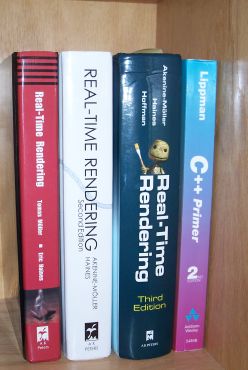
fourth edition might be C++?Tim talks about how the GPU has become general enough that we will soon be able to get away from rasterization as the only rendering algorithm. Back ten years ago, dealing with an API to do all interactive graphics was limiting. Widening it out with programmable shaders gives more flexibility, but at the cost of complexity of managing the programming environment. Nowadays you’re programming two separate computers that talk to each other. The shift to parallel programming is already a major change in how we need to think about computers, one that hasn’t become a core concept for most of us, yet (myself included; I’m doing my best to wrap my head around Intel’s Threading Building Blocks, for example). Doing such programming in a few different languages is a “feature” we’d all love to see go away.

With Larrabee, CUDA, and compute shaders, the trends of more flexibility continue, though in different flavors. It seems unlikely to me that the pipeline model itself for rendering will fade in popularity any time soon, though rasterization (traditional GPUs) vs. tiling (Larrabee, handhelds) will continue to be a debate. Tim mentions voxel rendering techniques (really, heightfield, in the old games) as something that died once the GPU took over. True. Such techniques are making a return on the GPU even today, via relief mapping and adaptive tessellation. We’re also seeing volume rendering by marching along rays; if an algorithm can be refit to work on a GPU, it will find some use.

So I agree, the increase in flexibility will be all to the good in letting programmers again do much more than render textured opaque triangles via a Z-buffer really fast and most everything else not-so-fast. Frankly, I believe much of the buzz about interactive ray tracing is more an expression of yearning by us graphics programmers that we could actually program again, vs. calling an API. The April Fool’s Day spoof about ray tracing in DirectX 11 fooled a number of people I know, I believe because they wished it were true. Having hacked my fair share of rendering algorithms, I certainly see the appeal.

I think Tim’s a bit overoptimistic on the time frame in which such changes will occur. First, everyone needs to get this future hardware. Sure, NVIDIA points out there are 70 million CUDA-capable graphics cards out there today, but no one is floating CUDA-based programs as alternative interactive renderers at this point (though NVIDIA’s experiments with CUDA ray tracing are wonderful to see). DirectX 9 graphics cards will be around for years to come. As significant, making such techniques part of the normal development toolchain also takes awhile. I think of how long normal (dot-product) bump mapping, introduced around 2001, took to become a feature that was used in games: first most GPUs had to support it, then tools had to generate and manage the maps, then artists had to be trained to use the tools, etc.

When the second edition of our book came out, it was a few hundred pages longer than the first. I held out the hope to Tomas that our third edition would be shorter. My logic was that, with programmable shaders coming to the fore, we wouldn’t have to cover all the little variants that were possible, but rather could just present pure algorithms and not worry about the implementation details.

This came true to some extent. For example, we could cut out chunks of text about extremely specific ways to efficiently compute the Fresnel term, or give examples showing how assembly instructions are packed together in a pixel shader. There was now plenty of space on the GPU for shader instructions, so such detail was nonsensical. It would be like a programming languages book listing all the programs that could be written in the language. We still do have to spend time dealing with the vagaries of the APIs, such as the relatively space-inefficient ways in which triangles are fed through the pipeline (e.g. a “compact” representation of a cube must use 24 separate vertices, when all that is really needed are 8 points and 6 normals).

Counterbalancing such cuts in text, we found we had many more algorithms to write about. With both the increase in abilities in each successive generation of GPUs and APIs, coupled with research into ways to efficiently map algorithms onto new architectures, the book became considerably longer (and certainly heavier, since each illustration’s atoms now each needed 3 bytes instead of 1). So, I’m not holding out much hope for a shorter edition next time around-there’s just so much cool stuff that we can now do, and more yet to come.

Incidentally, we had asked Tim for a pithy quote for our new Hardware chapter. He said he didn’t have anything, but passed on one from Bily Zelsnack. This quote was tempting, but instead we used it in our last chapter: “Pretty soon, computers will be fast,” which I just love for some reason. It may sometimes take 20 seconds to open a file folder on Windows today, but I remain hopeful that someday, someday…

Read more:
Tim Sweeney Interview

Miyamoto: ESA Champion 2009

from G4 TV - X-Play:

The "Walt Disney" and "father" of modern and electronic gaming, Mr. Shigeru Miyamoto, will be receving the 2009 ESA champion award during the "Nite to Unite For Kids" event, sponsored by the ESA, this October 22 in San Francisco, CA. “With his remarkable creativity and passion for fun, family entertainment, Miyamoto-san and his team at Nintendo have produced many iconic games that appeal to audiences of all ages," said by Michael D. Gallagher, president and CEO of the ESA.

Miyamoto will join award recipients such as George Lucas and Sony's Ken Kutaragi. Hit the source for more info about the event. You go raise that roof now, Miyamoto-san!

Source

Read more:
Miyamoto: ESA Champion 2009